



कोकणचे पारंपरिक लोकनृत्य: संस्कृती आणि समाजाची एक चैतन्यमय अभिव्यक्ती
The Konkan region, stretching along the western coast of India, is rich in cultural heritage and traditional art forms. Among its many cultural treasures, folk dances hold a special place as they reflect the lifestyle, beliefs, and festive spirit of the local communities. These dances are deeply rooted in nature, mythology, and the daily lives of the people.
One of the most popular traditional dances of the Konkan region is Dashavatara, a vibrant performance that depicts the ten incarnations of Lord Vishnu. Performed during festivals and temple celebrations, it combines storytelling, music, and dramatic expressions. The performers wear colorful costumes and elaborate makeup, bringing mythological characters to life on stage.
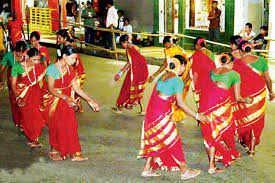
Another widely celebrated dance form is Koli dance, performed by the fishing community. This dance captures the essence of the sea, with rhythmic movements that mimic rowing boats and casting nets. Accompanied by traditional music and lively beats, Koli dance is often performed during weddings and community gatherings, showcasing unity and joy.
These traditional folk dances are not just forms of entertainment but also a means of preserving the cultural identity of the Konkan region. Passed down through generations, they continue to thrive in modern times, connecting people to their roots while celebrating the rich diversity of Maharashtra’s coastal heritage.